Tiberius on Capri: What He Actually Did Here
Planning the climb?Nothing about Villa Jovis sells out — the €6 ticket comes from a card-only machine at the entrance, and the site took 20,585 visitors in 2024 against 206,663 at the Blue Grotto. What you can lock in from home is a guide for the walk up, cancellable free up to 24 hours before.
Check tour availabilityCapreae
The Romans called the island Capreae. Augustus had taken it from Naples and kept a villa complex here; Tiberius inherited that and made it the seat of government. When he left Rome for Campania in AD 26 nobody expected it to be permanent, and it was. Villa Jovis, finished the following year, is where the empire was administered from until AD 37 — letters in, orders out, the Senate operating at the other end of a courier route.
The twelve villas, and who actually said it
You will read everywhere that Tiberius built twelve villas on Capri. Two corrections are worth making. First, the twelve are Tacitus, not Suetonius: Annals IV.67 has Tiberius settled on the island with the twelve villas and their twelve names, and the Ministry’s own page attributes them to Tacitus. Suetonius gives no number at all. Second, Tacitus says Tiberius occupied twelve named villas, not that he built twelve. Several were Augustan and merely adapted — Palazzo a Mare on the north shore among them. Saying he built twelve overstates even the ancient claim, which is a strange thing to do to a man who has enough against him already.
Only two of the twelve are substantially excavated and open: Villa Jovis and Villa Damecuta in Anacapri. The rest are on the other Roman remains on Capri.
Why the summit, and not the harbour
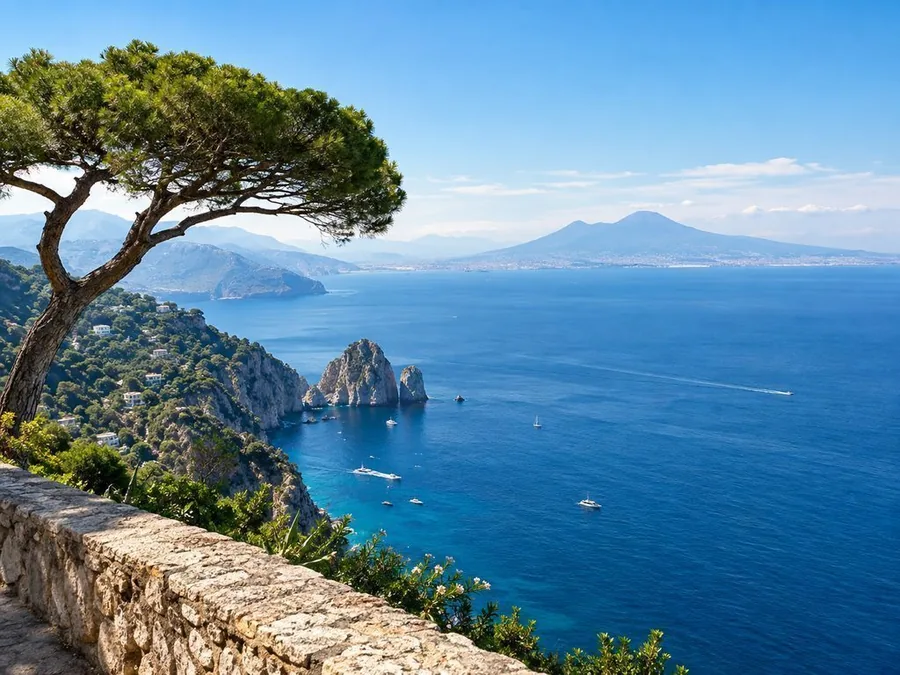
Look at where he put it. The north-east corner of the island, 334 metres up, at the point closest to the mainland and furthest from anywhere a boat can land easily. Behind the ticket office stands the base of the Faro, the signal tower that let messages move across the water. A man who governs from an island needs two things above everything: to see what is coming, and to control who gets to him. The plan of Villa Jovis answers both, which is clearer on the ground than in any text — what is actually left walks through it room by room.
The stories, and what to do with them
The notorious material about Tiberius on Capri comes from Suetonius, Tiberius 44. It is explicit, it is memorable, and it is the reason most people have heard of this hill at all. I am not going to repeat its contents and I am not going to pretend it is not in the sources. What matters is how much weight it carries.
Very little, on the evidence. Tacitus — generally the more reliable historian, and no admirer of Tiberius — alludes to the emperor’s reputation only vaguely at Annals 6.51 and gives no Capri detail whatever. Cassius Dio mentions only generalised vice. Suetonius was writing decades after the fact, in a genre that rewarded the salacious, about an emperor the senatorial class had every reason to blacken. Modern assessment treats much of it as exactly that kind of slander; the reference site Bad Ancient rates the child-abuse claim “Unproven”, and the consensus description of the Capri years is reclusive rather than orgiastic.
That is where I would leave it: a single hostile source, uncorroborated by the better historian who had every motive to use it. Not disproved, because you cannot disprove that sort of thing at two thousand years’ distance. Not established either. The same logic applies, with a physical objection added, to the cliff the tour boats point at — see the Salto di Tiberio.
Caligula was here
The young Gaius, later Caligula, was on Capri with Tiberius and was present at or around his death. The ancient sources implicate him and the praetorian prefect Macro in hastening the end. Beyond that nothing is established, and the embroidery that circulates about his years on the island is embroidery.
Where Tiberius actually died
Not at Villa Jovis and not on Capri. He left the island, fell ill at Astura, and died at Misenum on the mainland on 16 March AD 37, months short of his seventy-eighth birthday, in a villa on the Misenum promontory that had belonged to Lucius Lucullus. The accounts of the manner of his death differ: both Tacitus, at Annals VI.50, and Suetonius have Macro and Caligula finishing what the illness started after the old man appeared to revive.
The one detail that belongs on this hill is an omen. Suetonius, at Tiberius 74, records the lighthouse on Capreae being thrown down by an earthquake as a portent around the time of the emperor’s death. Popular retellings disagree about whether it fell before or after, so I leave the direction out. The base of that tower is still there, immediately behind the ticket office, restored and lit since June 2026.
Read Suetonius before you come, then stand in the imperial quarters and notice how little the building agrees with him. It is a plain, defensible, water-obsessed administrative complex — and whether that is worth the climb is a question the gossip cannot answer for you.
Frequently asked questions
What did Tiberius do at Villa Jovis?
He governed. Tiberius left Rome in AD 26, completed Villa Jovis in AD 27 and ran the Roman empire from this summit for the last eleven years of his life, never returning to Rome. The buildings that survive are administrative, residential and bath rooms — see what is actually left.
Did Tiberius die at Villa Jovis?
No. He left Capri, fell ill at Astura and died at Misenum on the mainland on 16 March AD 37, months short of 78. Tacitus and Suetonius both have Macro and Caligula hastening the end after he appeared to revive.
Are the stories about Tiberius on Capri true?
They come from Suetonius, Tiberius 44, written decades later. Tacitus alludes only vaguely at Annals 6.51 with no Capri detail, and Cassius Dio mentions generalised vice. Modern assessment treats much of it as senatorial-class slander and describes the Capri years as reclusive.
What did the Romans call Capri?
Capreae. Augustus held the island before Tiberius and kept a villa complex on it, part of which Tiberius adapted rather than built — the surviving sites are listed on the other Roman ruins on Capri.